
If you’re asking “how many miles is good for a used car?”, you’re already ahead of most buyers.
Best PDF Tools Used By Our Car DealershipMileage is one of the single biggest pricing and risk factors in the used-car market, yet it’s also one of the most misunderstood. Some buyers panic at 100,000 miles. Others proudly buy cars with 180,000 miles thinking they scored a deal. Both can be wrong.
The truth is more nuanced, more mechanical, and more honest than most listings make it sound.
This guide breaks down exact mileage ranges, what they really mean for reliability and value, how mileage interacts with age, maintenance, powertrain type, and driving conditions, and how to decide whether a used car with “high miles” is actually a smart buy.
The Short Answer (For Buyers in a Hurry)
A good mileage range for a used car typically looks like this:
- Under 40,000 miles → Excellent, near-new condition
- 40,000–70,000 miles → Ideal sweet spot for value
- 70,000–100,000 miles → Still good, if well maintained
- 100,000–150,000 miles → Acceptable with proof of care
- 150,000+ miles → Buy only if price, maintenance, and model justify it
But that’s just the headline. Let’s unpack what those numbers actually mean.
What Is “Normal” Mileage Per Year?
Before mileage means anything, you need context.
The average driver puts on about 12,000 to 15,000 miles per year. That gives us a simple baseline:
- 5-year-old car → ~60,000–75,000 miles
- 8-year-old car → ~100,000–120,000 miles
- 10-year-old car → ~120,000–150,000 miles
A car that significantly exceeds this range has above-average usage. A car well below it may be a garage queen, or it may have sat unused for long periods, which has its own risks.
Mileage without age is meaningless. Always evaluate the two together.

Mileage Breakdown: What Each Range Really Means
Under 40,000 Miles: Practically New
This is the lowest-risk category.
What you’re getting:
- Minimal engine and transmission wear
- Suspension, steering, and braking components still fresh
- Often still under factory warranty
Downside:
- Highest prices
- Depreciation already absorbed by first owner, but still significant
Best for: Buyers who want reliability above all else and plan long-term ownership.
40,000–70,000 Miles: The Sweet Spot
If there’s a universally “good” mileage range, this is it.
Why it’s ideal:
- Major components are proven but not worn out
- Depreciation has slowed dramatically
- Plenty of life left in engine and drivetrain
What to check:
- Tire condition
- Brake life
- Early suspension wear (bushings, struts)
Best for: Most used-car buyers looking for value and reliability.
70,000–100,000 Miles: Still a Smart Buy (With Conditions)
This range scares some buyers unnecessarily.
Modern cars are engineered to comfortably exceed 150,000 miles when maintained. At 80k or 90k miles, the vehicle is far from “done.”
Expect:
- Some wear items approaching replacement
- Higher importance of service records
- Timing belt or major service intervals on certain engines
Price advantage: Significant discounts compared to lower-mileage equivalents.
Best for: Budget-conscious buyers who want a reliable daily driver.
100,000–150,000 Miles: Where Maintenance Matters Most
This is the line where mileage starts separating good cars from neglected ones.
A well-maintained 120k-mile car can be better than a neglected 70k-mile car.
Critical checks:
- Transmission service history
- Cooling system health
- Suspension components
- Oil consumption or leaks
Reality check: This is where buyers must stop trusting mileage alone and start evaluating condition.
Over 150,000 Miles: High Mileage, High Risk, High Reward
High-mileage cars are not automatically bad, but they are price-sensitive purchases.
Buy only if:
- The price reflects the mileage
- Maintenance history is documented
- The model has a proven long-term reliability record
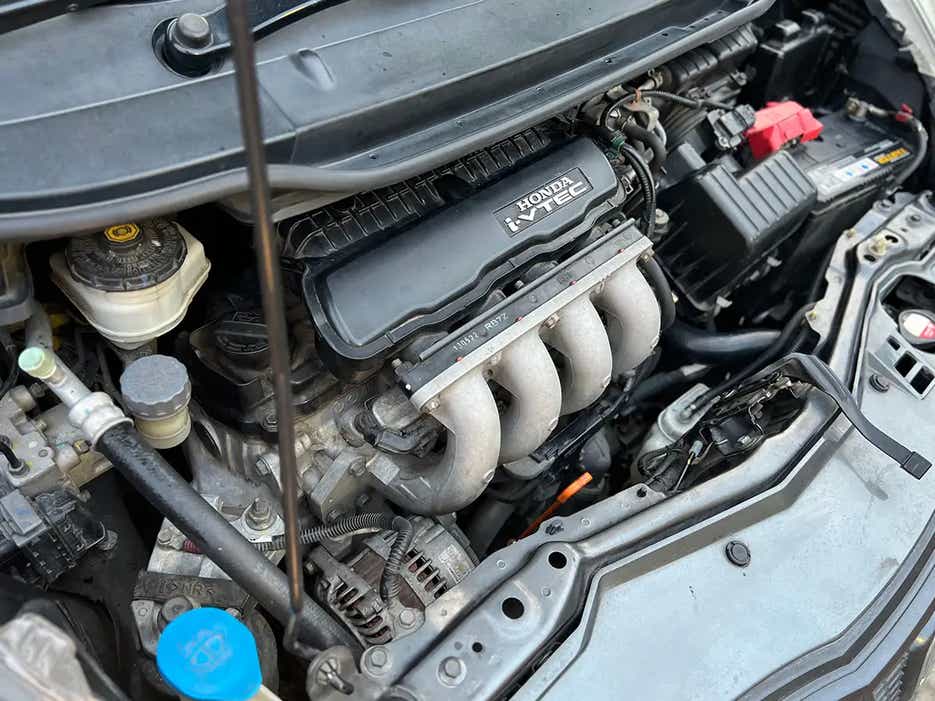
Expect:
- More frequent repairs
- Lower resale value
- Potential for major components nearing end-of-life
Best for: Short-term ownership, secondary vehicles, or mechanically inclined buyers.
Mileage vs Age: Which Matters More?
Surprisingly, age can matter as much as mileage.
A 12-year-old car with 60,000 miles may still suffer from:
- Dry rubber seals
- Brittle hoses
- Outdated safety technology
- Corrosion in harsh climates
Meanwhile, a 6-year-old car with 110,000 highway miles may be mechanically healthier.
Rule of thumb:
Mileage tells you how much a car was used.
Age tells you how long materials have been degrading.
You need both.
City Miles vs Highway Miles: Not All Miles Are Equal
This is one of the most overlooked factors in used-car buying.
Highway Miles
- Steady speeds
- Minimal braking and acceleration
- Less engine strain
City Miles
- Stop-and-go traffic
- Frequent braking
- More transmission and suspension wear
A car with 120,000 highway miles can be mechanically gentler than a car with 70,000 city miles.
Mileage alone doesn’t reveal this, but service records and ownership history often do.
How Long Are Modern Cars Really Built to Last?
The old idea that cars “die” at 100,000 miles is outdated.
Today’s reality:
- 150,000 miles is normal with basic maintenance
- 200,000 miles is common for well-built models
- 250,000+ miles is achievable for certain engines and platforms
Engineering tolerances, better oils, improved manufacturing, and advanced engine management systems have dramatically extended vehicle life.
Mileage is no longer a death sentence.

When Mileage Should Matter More
Mileage deserves extra weight when:
- The vehicle has a turbocharged engine
- It uses a dual-clutch or complex automatic transmission
- The brand has known reliability issues
- Maintenance records are missing
In these cases, lower mileage reduces risk.
When Mileage Matters Less
Mileage becomes less critical when:
- Full service history is available
- The engine and transmission have strong reputations
- The vehicle was primarily highway driven
- The price reflects the mileage accurately
A well-documented high-mileage car often outperforms a low-mileage mystery.
What Mileage Does to Used Car Pricing
Mileage directly impacts resale value, often in non-linear steps:
- Under 60k miles → Premium pricing
- 60k–100k miles → Gradual depreciation
- Over 100k miles → Steeper price drops
- Over 150k miles → Buyer pool shrinks sharply
This creates opportunity.
Buying at 90k–110k miles often delivers the best value-per-dollar in the used market.
Red Flags: When Mileage Is a Problem
Avoid used cars when mileage comes with:
- No maintenance records
- Inconsistent odometer readings
- Signs of heavy commercial use
- Multiple owners in a short time
- Deferred maintenance at major intervals
Mileage only tells part of the story. These clues tell the rest.
The Smart Buyer’s Mileage Checklist
Before deciding if a used car’s mileage is “good,” ask:
- Is the mileage reasonable for the car’s age?
- Are service records available?
- Was maintenance done on time?
- Does the price reflect the mileage?
- Is this model known to last beyond 150k miles?
If the answers line up, mileage becomes a number, not a fear.
Final Verdict: So, How Many Miles Is Good for a Used Car?
Here’s the honest answer:
- Under 70,000 miles is ideal
- 70,000–100,000 miles is still very good
- 100,000–150,000 miles is acceptable with proof of care
- Over 150,000 miles requires caution, not panic
A “good” used car is not defined by mileage alone. It’s defined by how it was driven, how it was maintained, and how it’s priced today.
If you focus only on the odometer, you’ll miss great cars.
If you ignore it entirely, you’ll buy problems.
The smartest buyers do both.
Leave a Reply