
The question “what type of gas does my car use?” sounds basic, yet it’s one of the most expensive mistakes drivers make. Using the wrong fuel can lead to:
Best PDF Tools Used By Our Car Dealership- Reduced performance
- Worse fuel economy
- Long-term engine damage
- Voided warranty claims in extreme cases
This guide explains exactly how to find the right gas for your car, what octane ratings really mean, when premium is required versus wasted, and clears up common myths, with credible, hyperlinked sources throughout.
Short Answer (Read This First)
Your car uses the gas grade specified by the manufacturer, not what the pump suggests and not what sounds “better.”
Most cars use:
- Regular unleaded (87 octane in the U.S., 87–89 in Canada)
Some cars require:
- Mid-grade (89 octane)
- Premium (91–93 octane)
The only correct answer is found on your car, not online guesses.
Where to Find What Type of Gas Your Car Uses
1. Inside the Fuel Door (Most Reliable)
Open your fuel door. Many vehicles have a sticker that says something like:
- “Unleaded gasoline only”
- “87 octane minimum”
- “91 octane recommended”
- “Premium fuel required”
This label is your primary authority.
The U.S. Department of Energy confirms this is the correct reference point:
https://www.fueleconomy.gov/feg/octane.shtml
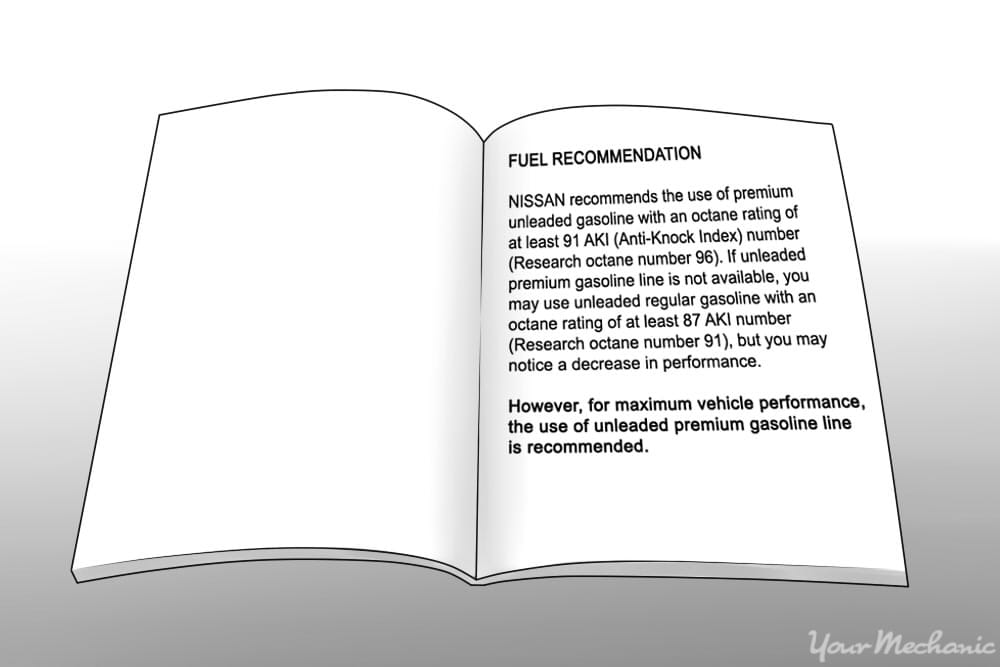
2. Owner’s Manual (Definitive Source)
If the fuel door sticker is missing, check the owner’s manual. It will clearly state:
- Minimum octane rating
- Whether premium is required or recommended
- Ethanol limits (usually up to E10 or E15)
Owner manual fuel guidance explained by AAA:
https://exchange.aaa.com/safety/driving-advice/fuel-requirements/
3. Under the Hood (Sometimes)
Some manufacturers place fuel labels:
- On the engine cover
- Near the radiator support
- On the strut tower
Not universal, but worth checking.
Understanding Gas Types (What Those Numbers Mean)
Octane Rating Explained (Without the Confusion)
Octane rating measures resistance to engine knock, not fuel quality or cleanliness.
Higher octane:
- Does not mean more power
- Does not mean better fuel economy (unless required)
- Only matters for engines designed for it
U.S. EPA explanation of octane ratings:
https://www.epa.gov/transportation-air-pollution-and-climate-change/gasoline-octane-ratings

Common Gas Types at the Pump
Regular Unleaded
- 87 octane
- Used by most naturally aspirated engines
- Cheapest option
Mid-Grade
- 89 octane
- Required by some vehicles
- Often recommended for light towing or heavy loads
Premium
- 91–93 octane
- Required for some turbocharged or high-compression engines
- More expensive, not optional if required
Does My Car Really Need Premium Gas?
This depends on one word in your manual.
“Premium Required”
- You must use premium
- Using lower octane can cause engine knock
- Long-term damage is possible
“Premium Recommended”
- Regular gas will not damage the engine
- You may lose performance or fuel efficiency
- Premium may be beneficial but not mandatory
AAA tested this and confirmed premium is unnecessary unless required:
https://exchange.aaa.com/safety/driving-advice/premium-fuel/
What Happens If You Use the Wrong Gas?
Using Lower Octane Than Required
- Engine knock or pinging
- Reduced power
- ECU pulls timing to protect the engine
- Possible long-term wear
Using Higher Octane Than Needed
- No damage
- No performance gain
- You simply waste money
Consumer Reports confirms no benefit to premium in regular-fuel cars:
https://www.consumerreports.org/cars/car-maintenance/does-your-car-really-need-premium-gas-a2487348221/
What About Ethanol (E10, E15, E85)?
E10 (Up to 10% Ethanol)
- Safe for almost all modern vehicles
- Most common fuel in North America
EPA ethanol guidance:
https://www.epa.gov/fuels-registration-reporting-and-compliance-help/e10-fuel
E15 (15% Ethanol)
- Approved for most vehicles 2001 and newer
- Not suitable for all engines
EPA E15 compatibility list:
https://www.epa.gov/fuels-registration-reporting-and-compliance-help/e15-fuel
E85 (Flex Fuel Only)
- Up to 85% ethanol
- Requires a flex-fuel vehicle
- Using E85 in a non-flex car can cause severe damage

Diesel vs Gas (Critical Difference)
If your car uses:
- Diesel → Never use gasoline
- Gasoline → Never use diesel
Mixing these can destroy:
- Fuel pumps
- Injectors
- Entire fuel systems
NHTSA fuel misfueling guidance:
https://www.nhtsa.gov/road-safety/fuel-misfueling
Special Cases: Turbo, Performance, and Towing
Turbocharged Engines
- Often require premium
- Higher cylinder pressure increases knock risk
Towing or Heavy Loads
- Some manufacturers recommend higher octane temporarily
- Check your manual before towing
Gas Type by Vehicle Category (General Guide)
| Vehicle Type | Typical Fuel |
|---|---|
| Economy sedan | Regular (87) |
| Compact SUV | Regular (87) |
| Full-size SUV | Regular or Mid-grade |
| Turbocharged car | Premium (91–93) |
| Luxury/performance | Premium required |
| Diesel vehicle | Diesel only |
| Flex-fuel vehicle | E10–E85 |
Always verify with your specific vehicle.
How to Avoid Fueling Mistakes Forever
Do this once:
- Take a photo of your fuel door sticker
- Save it on your phone
You’ll never guess again.
Final Answer: What Type of Gas Does My Car Use?
Here is the correct, no-BS answer:
- Your car uses the fuel specified by the manufacturer
- Most cars use regular unleaded (87 octane)
- Some require premium, and that requirement matters
- Higher octane is not better unless required
- Ethanol content matters just as much as octane
If you remember one rule:
Follow the fuel door sticker, not the pump label.
Leave a Reply