
Knowing how to use a car battery charger is one of those skills every driver eventually needs. A dead battery doesn’t mean your car is broken, but charging it incorrectly can cause real damage, safety hazards, or shorten battery life permanently.
Best PDF Tools Used By Our Car DealershipThis guide explains exactly how to use a car battery charger the right way, even if you’ve never done it before. We’ll cover charger types, safety rules, step-by-step instructions, common mistakes, and what to do if charging doesn’t work, with credible, official sources hyperlinked throughout.
Quick Answer (For Emergencies)
If your battery is dead and you need the basics:
- Turn the car off
- Connect red clamp to positive (+)
- Connect black clamp to negative (–) or chassis ground
- Set charger to 12V
- Select the correct battery type
- Plug in the charger
- Let it charge fully
- Unplug charger before removing clamps
That’s the core. Now let’s do it properly and safely.
What a Car Battery Charger Actually Does
A car battery charger:
- Supplies controlled electrical current
- Restores voltage to a depleted battery
- Recharges stored chemical energy
Most passenger vehicles use a 12-volt lead-acid battery (flooded, AGM, or EFB).
The U.S. Department of Energy explains battery fundamentals here:
https://www.energy.gov/energysaver/automotive-battery-basics
Types of Car Battery Chargers (This Matters)
Using the wrong charger or setting is how people ruin batteries.
1. Trickle Chargers
- Low amperage (1–2A)
- Slow but gentle
- Best for maintenance and storage
AAA battery guidance:
https://exchange.aaa.com/safety/driving-advice/car-battery-maintenance/
2. Standard Manual Chargers
- Fixed amperage (6A–10A)
- Require monitoring
- Risk of overcharging if left too long
3. Smart / Automatic Chargers (Recommended)
- Adjust charge rate automatically
- Shut off when battery is full
- Compatible with modern vehicles
Consumer Reports charger advice:
https://www.consumerreports.org/cars/car-maintenance/how-to-use-a-battery-charger-a3693728463/
4. Jump Starters with Charge Mode
- Emergency-focused
- Not ideal for full battery recovery
Before You Start: Critical Safety Rules
Do NOT Skip This Section
Car batteries contain:
- Sulfuric acid
- Flammable hydrogen gas
- High current potential
The National Safety Council warns improper charging can cause explosions:
https://www.nsc.org/home-safety/safety-topics/batteries

Safety Checklist
- Work in a well-ventilated area
- Wear eye protection
- No smoking or sparks
- Charger unplugged before connecting
- Battery terminals clean and dry
Step-by-Step: How to Use a Car Battery Charger
Step 1: Identify Your Battery Type
Check the label on the battery:
- Flooded lead-acid
- AGM (Absorbent Glass Mat)
- EFB (Enhanced Flooded Battery)
Using the wrong setting can overheat or damage the battery.
Battery type explanation (Bosch):
https://www.boschautoparts.com/en/auto/battery-technology
Step 2: Turn the Vehicle Completely Off
- Engine off
- Keys removed
- Lights and accessories off
Never charge with the engine running.
Step 3: Locate Battery Terminals
- Positive (+) usually red
- Negative (–) usually black
If the battery is under a cover, remove it carefully.
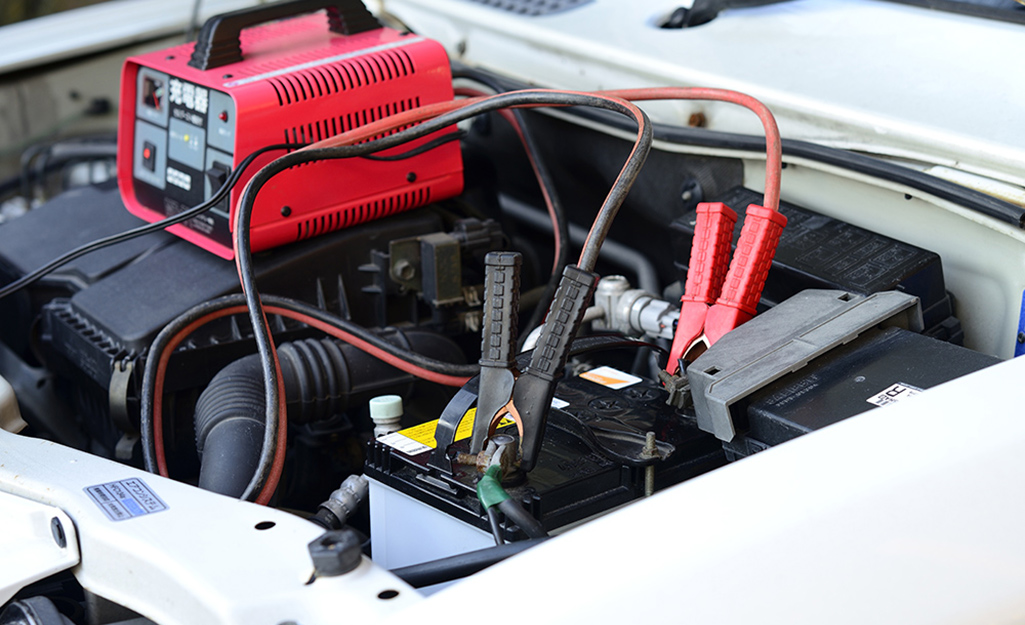
Step 4: Connect the Charger Clamps (Order Matters)
Correct Connection Order
- Red clamp → Positive (+) terminal
- Black clamp → Negative (–) terminal
- Or unpainted metal ground on the chassis
Why grounding matters:
https://www.familyhandyman.com/article/how-to-jump-start-a-car/
Step 5: Set the Charger Correctly
On a smart charger, select:
- Battery type
- Voltage: 12V
- Charging mode (normal, slow, AGM)
Avoid “boost” modes unless specified.
Step 6: Plug in the Charger
- Plug charger into the wall
- Charging begins automatically (smart chargers)
- Indicator lights or screen will show progress
Step 7: Let the Battery Charge Fully
Charging time depends on:
- Battery capacity (Ah)
- State of discharge
- Charger amperage
Typical Charging Times
- Trickle charger: 8–24 hours
- 10A charger: 4–8 hours
- Severely dead battery: up to 24 hours
AAA charging time estimates:
https://exchange.aaa.com/safety/driving-advice/jumpstarting-a-car/
Step 8: Disconnect Safely (Reverse Order)
- Unplug charger from outlet
- Remove black clamp
- Remove red clamp
Never disconnect while the charger is powered.
How to Tell When the Battery Is Fully Charged
Signs of a full charge:
- Charger indicates “Full” or “Maintenance”
- Voltage reads ~12.6–12.8V
- Charger automatically shuts off
Battery voltage chart (Interstate Batteries):
https://www.interstatebatteries.com/blog/what-voltage-should-a-car-battery-have
What If the Battery Won’t Charge?
If charging fails, one of these is likely true:
Battery Is Sulfated
- Common in older batteries
- May not accept charge
Battery Has a Dead Cell
- Charger runs but voltage never rises
- Replacement required
Battery Is Too Cold or Too Hot
- Extreme temperatures affect charging
- Ideal range: 50–80°F (10–27°C)
DOE temperature effects on batteries:
https://www.energy.gov/eere/vehicles/articles/extreme-temperatures-and-electric-vehicle-range
Can You Charge a Battery Without Removing It?
Yes. In fact, most manufacturers recommend charging in-vehicle unless:
- Battery is leaking
- Battery is damaged
- Battery is frozen
Modern vehicles are designed for this.
Common Mistakes That Ruin Batteries

1. Using Boost Mode Too Often
- Overheats plates
- Shortens lifespan
2. Overcharging
- Causes electrolyte loss
- Warps internal plates
3. Reversing Polarity
- Can destroy electronics
- May blow fuses or ECUs
NHTSA electrical system warnings:
https://www.nhtsa.gov/road-safety/vehicle-maintenance
How Often Should You Charge a Car Battery?
You should charge if:
- Voltage drops below 12.4V
- Car sits unused for 2+ weeks
- Cold weather drains the battery
- Frequent short trips prevent full recharge
Trickle Charger vs Jump Starting
| Situation | Best Option |
|---|---|
| Overnight charging | Battery charger |
| Long-term storage | Trickle charger |
| Emergency start | Jump starter |
| Battery health | Charger |
Jump starting stresses batteries. Charging restores them.
What About Modern Cars With Electronics?
Modern vehicles are sensitive to voltage spikes.
Best practices:
- Use smart chargers
- Avoid high-amp boost modes
- Follow manufacturer battery procedures
Consumer Reports modern vehicle advice:
https://www.consumerreports.org/cars/car-maintenance/how-to-prevent-battery-problems-a4092929386/
When Charging Is NOT Enough
Replace the battery if:
- It’s over 4–6 years old
- Fails load testing
- Won’t hold charge overnight
- Corrosion is severe
Battery lifespan explained by AAA:
https://exchange.aaa.com/safety/driving-advice/how-long-do-car-batteries-last/
Final Answer: How to Use a Car Battery Charger
Here’s the correct, safe, no-nonsense summary:
- Use the right charger for your battery
- Always connect red to positive, black to negative
- Set 12V and correct battery type
- Charge fully, don’t rush it
- Disconnect after unplugging
- Never overcharge or reverse polarity
If you follow these steps, you won’t just start your car, you’ll extend battery life and avoid costly electrical damage.
If you want, I can also:
- Explain AGM vs flooded charging differences
- Recommend best chargers by budget
- Create a printable battery-charging checklist
- Cover charging batteries in winter
Just tell me.
Leave a Reply