
The question “do electric cars use oil?” keeps showing up for a reason. Oil changes have been drilled into drivers’ heads for over a century, so when electric vehicles (EVs) entered the mainstream, confusion was inevitable.
Best PDF Tools Used By Our Car DealershipSome people assume EVs still need oil “for lubrication.” Others think manufacturers are hiding maintenance costs. Both ideas are wrong, but the full answer is more nuanced than a simple yes or no.
This guide explains exactly where oil fits (or doesn’t) in electric cars, what fluids EVs do use, how maintenance really compares to gas vehicles, and why this matters for long-term ownership costs. All claims are backed by official, verifiable sources, hyperlinked throughout.
Short Answer (Clear and Accurate)
No, electric cars do not use engine oil and do not require oil changes.
Why?
- Electric vehicles do not have internal combustion engines
- No pistons, crankshafts, camshafts, or valves
- No engine oil needed for lubrication or cooling
However, some EV components do use small amounts of specialized lubricants or fluids, which is where confusion usually starts.
Why Gas Cars Need Oil (and EVs Don’t)
To understand why EVs don’t use oil, it helps to understand what engine oil actually does in a gas-powered vehicle.
In an internal combustion engine, oil is required to:
- Lubricate moving metal parts
- Reduce friction and heat
- Prevent corrosion
- Carry contaminants to the oil filter
The U.S. Department of Energy explains the complexity of combustion engines and their lubrication needs here:
https://www.energy.gov/eere/vehicles/internal-combustion-engine-basics
Electric vehicles eliminate nearly all of these components.
What’s Missing in an Electric Car
A fully electric vehicle does not have:
- Engine block
- Pistons
- Valves
- Timing chain or belt
- Fuel injectors
- Exhaust system
- Oil pan
- Oil filter
Without these parts, there is nothing that requires engine oil.
This is confirmed directly by the U.S. Department of Energy’s EV overview:
https://www.energy.gov/eere/electricvehicles/electric-vehicle-basics
So Why Do People Think EVs Use Oil?
There are three main reasons this myth persists:
- People confuse EVs with hybrids
- Some EV components use lubricants
- Dealerships and service advisors sometimes oversimplify explanations
Let’s clear each one up properly.
Electric Vehicles vs Hybrids (Critical Distinction)
Fully Electric Vehicles (EVs)
- Powered 100% by electricity
- No gas engine
- No oil changes, ever
Hybrid Vehicles
- Combine an electric motor and a gas engine
- Do require oil changes
- Often lower oil change frequency than traditional cars
The EPA explains this difference clearly:
https://www.fueleconomy.gov/feg/evtech.shtml
If a vehicle has any gas engine, it uses oil.
If it doesn’t, it doesn’t.
Do Electric Cars Use Any Fluids at All?
Yes, but not engine oil.
Electric vehicles still rely on a few essential fluids, which are very different from oil changes.
1. Gear Reduction Fluid (Not Engine Oil)
Most EVs use a single-speed reduction gearbox to transfer power from the electric motor to the wheels.
This gearbox:
- Contains a small amount of lubricant
- Is sealed
- Often designed to last the lifetime of the vehicle
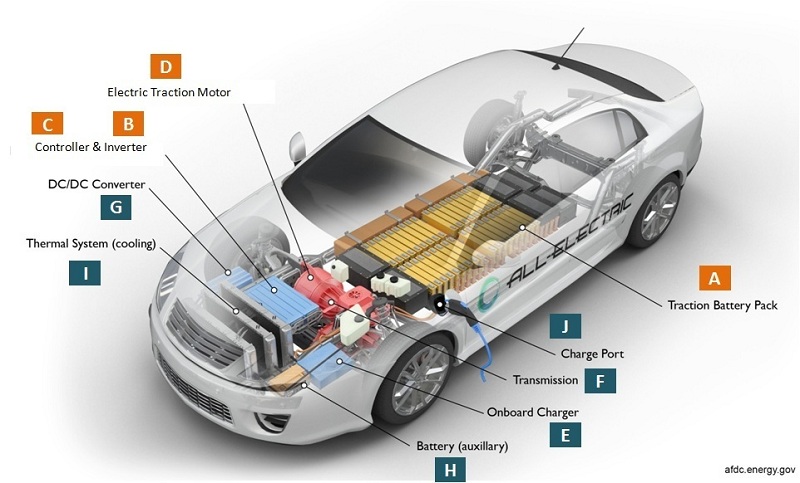
Tesla, for example, uses sealed gear oil systems with no scheduled service intervals for most models, as outlined in their official maintenance documentation:
https://www.tesla.com/support/vehicle-maintenance
Important difference:
- This fluid is not engine oil
- It does not require regular replacement
- It does not degrade like combustion engine oil
2. Coolant (Yes, EVs Still Need Cooling)
Electric vehicles use coolant to manage:
- Battery temperature
- Electric motor heat
- Power electronics
However, this coolant:
- Does not get contaminated by combustion byproducts
- Lasts significantly longer than engine coolant
- Is replaced at much longer intervals
General EV thermal management overview from the U.S. DOE:
https://www.energy.gov/eere/vehicles/articles/keeping-electric-vehicle-batteries-cool
3. Brake Fluid
EVs still use:
- Hydraulic braking systems
- Brake fluid
However, thanks to regenerative braking, EV brake systems experience:
- Less wear
- Fewer brake services
- Longer brake fluid life
NHTSA explains regenerative braking here:
https://www.nhtsa.gov/road-safety/electric-vehicle-safety
What EVs Do NOT Use (Compared to Gas Cars)
To be very clear, electric cars do not use:
- Engine oil
- Oil filters
- Spark plugs
- Fuel filters
- Transmission fluid (traditional multi-gear systems)
- Exhaust fluid
- Emissions-related fluids
This is one of the primary reasons EV maintenance costs are dramatically lower.
Maintenance Cost Comparison: EV vs Gas Car
According to the U.S. Department of Energy, EVs have 40% lower maintenance costs over their lifetime compared to gas vehicles.
Official source:
https://www.energy.gov/eere/vehicles/articles/fact-888-july-13-2015-maintenance-costs-electric-vehicles
Why the Savings Are Real
- No oil changes
- Fewer moving parts
- Less heat stress
- Reduced brake wear
- No emissions system failures
Over 5–10 years, skipping oil changes alone can save thousands of dollars.
Do Electric Cars Ever Need “Oil-Like” Service?
In rare cases:
- Some manufacturers recommend gearbox fluid inspection
- Coolant replacement may be required after many years
- These services are measured in decades, not months
For example, many EVs specify coolant service intervals at 8–10 years or more, according to manufacturer service schedules compiled by Consumer Reports:
https://www.consumerreports.org/cars/car-maintenance/what-maintenance-do-electric-cars-need-a1190127216/
That’s a far cry from 5,000-mile oil changes.
What Happens If You Ask for an Oil Change on an EV?
It happens more than you’d think.

Dealerships and service centers report EV owners requesting oil changes out of habit. In reality:
- There is no oil to change
- There is no oil filter
- Performing one is impossible
Consumer Reports documents this exact confusion among new EV owners:
https://www.consumerreports.org/cars/electric-vehicles/do-electric-cars-need-oil-changes-a7607181111/
Environmental Impact: Oil-Free Ownership
Skipping oil changes also has environmental benefits:
- No used oil disposal
- No oil filter waste
- Reduced petroleum demand
- Lower maintenance-related emissions
The EPA outlines the environmental impact of used motor oil here:
https://www.epa.gov/recycle/managing-used-oil
EVs eliminate this entire waste stream.
Do Electric Cars Use Oil for Power Steering or AC?
Power Steering
- EVs use electric power steering
- No hydraulic fluid required
Air Conditioning
- EV AC systems are electrically driven
- Use refrigerant, not oil-based engine systems
This further reduces fluid-related maintenance compared to older vehicles.
Common Myths (Debunked Properly)
“EVs still need oil for lubrication”
False. Electric motors do not require engine oil.
“EVs secretly use oil but manufacturers don’t tell you”
False. All fluids are listed in official service manuals.
“Oil changes are replaced by expensive EV services”
False. EV service schedules are significantly lighter and cheaper.
When Oil Is Involved Around EVs
Oil still exists around EV ownership, just not inside the vehicle:
- Manufacturing lubricants
- Tire production
- Industrial equipment
- Electricity generation in some regions
But the vehicle itself does not consume oil.
Final Answer: Do Electric Cars Use Oil?
Here is the correct, fully sourced answer:
- No, electric cars do not use engine oil
- No, they do not require oil changes
- Yes, they use small amounts of other fluids like coolant and brake fluid
- Yes, maintenance costs are significantly lower than gas vehicles
If a car has no engine, it has no oil changes. It really is that simple.
The confusion comes from decades of gasoline habits colliding with a completely different drivetrain architecture.
Once you understand that, the myth disappears for good.
Leave a Reply